Popular Posts

Caveat Emptor

The opinions expressed on this page are mine alone. Any similarities to the views of my employer are completely coincidental.

Friday, 11 April 2014

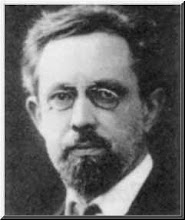
So farewell then Richard Hoggart

John Ezard's obituary of Richard Hoggart in today's Guardian is one of the best  I've read in a while. Sadly he (Ezard) is no longer with us  and we can but lament that we won't be seeing more from him. I wrote something a few years ago about Hoggart inspired by reading one of the volumes of his autobiography. 

I first read The Uses of Literacy almost exactly 20 years after it was  published and it described a world that for my generation had already long vanished. And yet what I took away from it was not  the celebration of a particular sort of working class life but something much more important: the sense that literary culture was important, discussion of it serious and that flippancy about it  not something that a child from my sort of background could afford. In short it was one of the  things that legitimated my growing feeling that it was OK to have intellectual interests in a world where few did.

I believe this is one of the reasons I get mad with the sort of academic, all to common in sociology, that treats the production of words as a mere game. I can imagine that Hoggart appreciated the attitude to a  craft that lay behind Bill Shankly's famous quip: 'Someone said to me 'To you football is a matter of life or death!' and I said "Listen, it's more important than that". 

Rereading what I wrote four years ago, I'm pleasantly surprised to find that it still seems to hang together, though I am a bit puzzled by what I could possibly have meant by "matrix of discrimination". I suppose I should be thinking of motes and beams.

Tuesday, 8 April 2014

Μολὼν λαβέ

So the guys over at GBCS have finally  got around to responding,  in a piece titled 'On social class, anno 2014'.  Obviously the use of Latin makes the whole thing seem classy, but what the hell, let's  raise the cultural ante and go Greek!

 Like the Persians the Savage crew fight mob handed, but it is always good to see defections from the opposing ranks - three of the originals seem to have declined the opportunity to join in this round. I wonder why? Could it be that they are having second thoughts? I don't know but I think we should be told. [That's enough of the cliches. Ed.] 

But, lo, what is this? Replacing them are two new recruits. A hearty welcome to Laurison and Snee who seem to have invented the new sport of writing replies to responses to articles they didn't write themselves. Think about it, the mercenary possibilities are endless. I'm looking forward to a few guest gigs myself.

Seriously though, I will  in due course let y'all know what I think about their effort (you didn't seriously think I'd pass that opportunity over did you?) but not just yet. At the moment I'm rather busy working on things that don't involve pointing out the glaring deficiencies of logic and reason in the work of others. At least until the Easter break is over I'd like to preserve my positively cheerful mood and concentrate on construction rather than demolition.

I can give you a few teasers though. Firstly and trivially, I hope the version of anno 2014  sent to Sociology is better copy edited than the one on the web. For starters you really do need to sort out your references boys: McGovern, P., Hills, S., Mills, C., (2007) indeed. And while we are on the subject I'm still pondering the Freudian significance of the fact that though you cite my critique you don't actually manage to reference it. Whoa, that is seriously deep repression man.

And then there is the thing I'll pose as an Easter competition. You might want to have another look at the table of model selection statistics that appears immediately above Appendix 2. Let's call it Table 3 though you seem to have forgotten to give it a title. Can you spot anything odd about it?  Clue: why does classification error appear to increase as the number of estimated parameters increases? And why is the change not monotonic in the number of parameters? And while we are at it what does classification error mean in a model where some of the manifest indicators are continuous?


Jeez, you were supposed to be making things clearer, not digging an even bigger hole!


Monday, 7 April 2014

Bauman, plagiarism, blah, blah

Another week, another plagiarism scandal. THE is reporting that one of Britain's favourite blah blah sociologists Zygmunt Bauman has been a bit naughty and caught out by a Cambridge PhD student. The claim is that Ziggy was a little lax in attributing his  debt to Wikipedia. Oh well,  when your USP is to publish more words than any comparable blah blah sociologists I can see how it might be necessary to cut a few corners. But the sage of Leeds isn't giving up without a fight. Taking a leaf out of Maria Miller's book he is brazening it out with a "the rules don't apply to me" type defence. THES quotes him as saying that in 60 years he had :  

“...never once failed to acknowledge the authorship of the ideas or concepts that I deployed, or that inspired the ones I coined” and goes on to say: “All the same, while admiring the pedantry of the authors of the Harvard Guide to Using Sources, and acknowledging their gallant defence of the private ownership of knowledge, I failed in those 60-odd years to spot the influence of the obedience to technical procedural rules of quotations on the quality (reliability, effectiveness and above all social importance) of scholarship: the two issues that Mr Walsh obviously confuses.”and then: “As his co-worker in the service of knowledge, I can only pity him.”

Brilliant. An object lesson. When caught with your trousers around your ankles first assert against all the evidence that they are in fact securely belted round your waist. Then say that in the purely hypothetical circumstance that  they might be  around your ankles this  would, in any case, be irrelevant. Then patronize the person that points out that the Emperor is naked and exposing himself in a vulgar fashion.

And what of the bold Polity Press, publisher by appointment to Bauman and a whole host of sociology's blah blah merchants? Apparently no one was willing to comment and, I assume, no one was prepared to admit that they had been the publisher's reader. Shame also on the "senior Cambridge academic" who was prepared to opine that Bauman had “a strong prima facie case to answer” but didn't have the cojones to allow their name to be published. If you are that senior you surely have nothing to be afraid of: Mr Walsh, who in his more humble position has much more to fear,  has put his head above the parapet so why shouldn't you? Of course in academic life as elsewhere it has always been the way of the generals to shove the subalterns over the top first.

Monday, 17 March 2014

GBCS comment out

My comment on the Great British Class Survey is now published in Sociology's OnlineFirst section and I've taken the pre-publication version down from my website - though the long version is still there. 

Four contributions, my own, Harriet Bradley's, Danny Dorling's and Nicola Rollocks' are grouped together in a section called Class Debate. It's an interesting title. I'm curious as to where the "debate" is? Certainly it's not among the four contributors who scarcely overlap in their commentary.

Savage et al have promised a reply which "expands on the implications of the GBCS for class analysis". I have no idea what this looks like as I haven't seen it yet, though apparently it won't contain direct answers to the substance of my paper this being deemed one of the "subsidiary responses" that are to be relegated to a blog post.

Funny, I thought the point of a debate is that you deal directly with the claims of those that want to contend with you. That means showing where, if you can,  in fact and logic they are wrong. That, I would have thought, means addressing the issues they raise directly. If you don't, then the unsophisticated could be forgiven for thinking that you were being, well,  a tad evasive. So much for debate; as I've pointed out previously it is sometimes the last thing that apparent enthusiasts for it want.


Friday, 14 March 2014

RIP Tony Benn

Just as with the passing of Saint Bob Crow all sorts of former political enemies will be seizing the opportunity of a soundbite. Despite the fact they never had a kind word for him while he was alive, now that Tony Benn is dead they will feel the need to express their deep, and heretofore hidden, respect for  him. The obvious response is really this sketch from NTNON.

I only saw  him in the flesh once, when he spoke at David Butler's Friday evening British Politics seminar. This would have been in the mid 80s when he was still the darling of the left. I have to be honest and say that the impression he left on me was that he was  slightly bonkers. Much of what he said was a  paranoid  conspiracy theory partly about American and NATO goings on in the Republic of Ireland. Who knows, maybe it was true or maybe he had just been listening to Christy Moore's  Knock Song.

For my generation Benn was the focus of forces that made the Labour Party unelectable for more than a decade and the left powerless to resist the march of the neo-liberals. The ramifications of this for what the Labour Party has become are obvious for all to see. It would be absurd to hold Benn personally responsible for everything that followed from 1979, but he did play his part in destroying the credibility of social democratic politics in the UK.

An interesting and sincere man? Yes (probably). A great politician and statesman. No.

Monday, 10 March 2014

Shaking the Tree

Friday was International Women's Day. Of course I didn't notice until it was pointed out to me by a colleague. So, belatedly, here's something for Katharina, her cousins and her and their mothers. The tree requires a lot more shaking.

Wednesday, 5 March 2014

Should there be a statute of limitation for post-publication commentary?

There is a fascinating spat going on over at orgtheory.net with overspill at Statistical Modeling, Causal Inference, and Social Science. The casus belli was an opinion piece by the editor of Administrative Science Quarterly, puffing an article in the latest edition of his journal and bad mouthing attempts to write social science for a popular audience with a few sideswipes at open access journals. So, pretty much business as usual.   

ASQ was the first journal whose aesthetic, circa 1982,  I fell in love with: the wide margins, the thick creamy paper, the thin band of text down the middle - I think New Left Review stole that idea from them - and above all the abstract art in full colour on the covers. It was also a pretty good journal - no idea what it's like now as I haven't read it for years.

The initial post was  quickly overwhelmed by commentary on a whole other range of issues some of which are actually quite interesting. What is also very interesting is how quickly tempers became frayed, skin was revealed to be rather thin and some quite amazing  attitudes were expressed.

I should say that the original authors of the article under discussion  - Balazs Kovacs and Amanda Sharkey - come out of this reasonably well, in the sense that after being dragged into someone else's war their responses have been measured and dignified. To avoid any misunderstanding I should lay my cards on the table. Kovacs and Sharkey's paper is, in my opinion, pretty decent, by which I mean better than 99% of the papers published in any of the major British sociology journals. It's the sort of paper that as an editor you are glad to have. In other words it is a serious piece of work, serious enough that it is worth spending time on criticizing it. For me, at least, that it high praise. There is an awful lot of stuff published in British sociology journals that is so bad that it simply isn't worthwhile to expend any effort on criticizing it because you know that your words will fall on cloth ears.

Let me repeat, good papers are worth expending critical effort on and some of the orgtheory commenters do just that, especially Stephen Morgan. Setting aside various not so hidden agendas which lie behind some of the exchanges I don't find Morgan's comments unreasonable. He's certainly got every right to express them and he does so (in my opinion) fairly and courteously.  When I came into academia this is what I thought it was supposed to be all about. A battle of ideas (not of egos) with no holds barred.

I've said it before and I'll say it again. Nobody is forced to write anything. But once you do and put it in the public domain you have made your compact with the Devil and are fair game. This applies to the most distinguished professor as well as the most junior post-grad. There aren't and shouldn't be any get out of jail free cards once you choose to unleash your work on the  world. Some of the criticism may be unreasonable and if it is you can choose either to ignore it or combat it. If you choose to ignore criticism put forward with serious intent, well that's your choice, but you shouldn't be surprised if people draw their own conclusions from that kind of behaviour.

One of the topics that came up in the discussion was whether there should be some restrictions on post-publication commentary. This elicited some quite curious reactions, including one to the effect that for that person publication was the end of the process and they wanted to get on with the next thing not defend what they have just published. Perhaps it was hastily composed - it was after all a comment on a blog entry - but for me that is a kind of perversion of the scientific spirit. It seems to turn the means - publication - into the end - the communication of something you feel is worth saying. If it was worth putting all that effort into saying in the first place it surely must be worth the effort to defend it. Or are we all just playing the game of seeing how many farm-yard noises we can fool some gullible journal editors into publishing?

I'm reminded of a bizarre situation I encountered at  the LSE. While I was there I participated from time to time in an informal sociological theory discussion group (which oddly contained only two sociologists neither of whom were members of the sociology department). We met from time to time & invited various interesting people to talk to us. We were constantly trying to get a very prominent social theorist to address us, someone who went out of the way to emphasize his love of discussion, willingness to give public lectures etc etc. He refused all invitations. It very soon became clear that the last thing this person wanted was to discuss his ideas with his peers. Instead he only wanted the flow of communication to be one way - de haut en bas and preferably with an audience that was so ill-informed that they were unable to challenge his "ideas" in any meaningful way. Undoubtedly he did very well for himself, but received no intellectual respect from anyone who was the slightest bit informed. His behaviour contrasted notably with that of Richard Sennett who did speak to us and gained my respect through doing so. Richard and I once taught a course together and it would be fair to say that we did not agree about how to do social science. But, and this is the key thing, Richard was prepared to enter into a full and frank exchange of views. We didn't agree but we also didn't agree to disagree. We talked to each other in front of the class & I think they learned something from our conversation. We need more people like that, people who won't shut up shop and try to bury crucial intellectual differences by refusing to discuss them or even just pretending they don't exist.